Own project · Stop 7 of 10
Flashcards
A flashcard app: front, back, right or wrong, and cards you do not know yet come up more often.
Goal
Build a learning tool that remembers which cards are already known.
Implementation
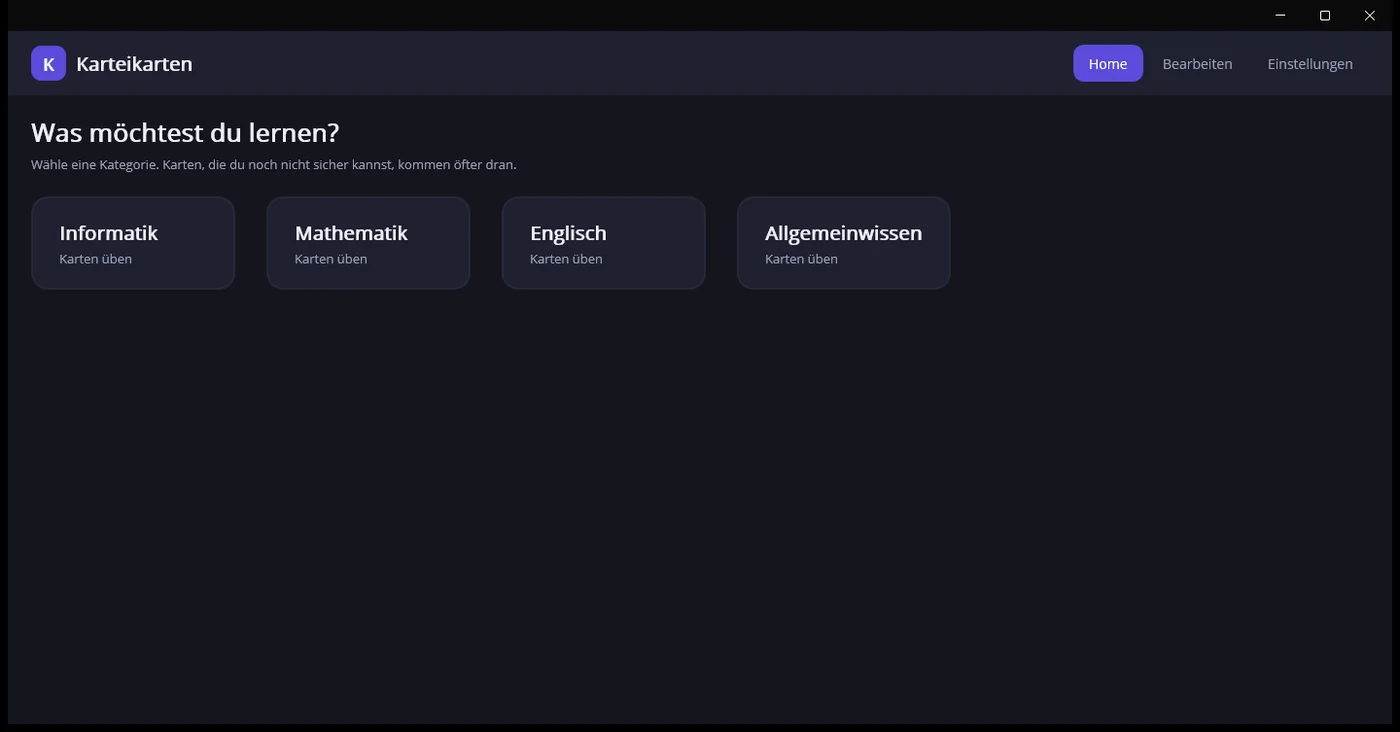
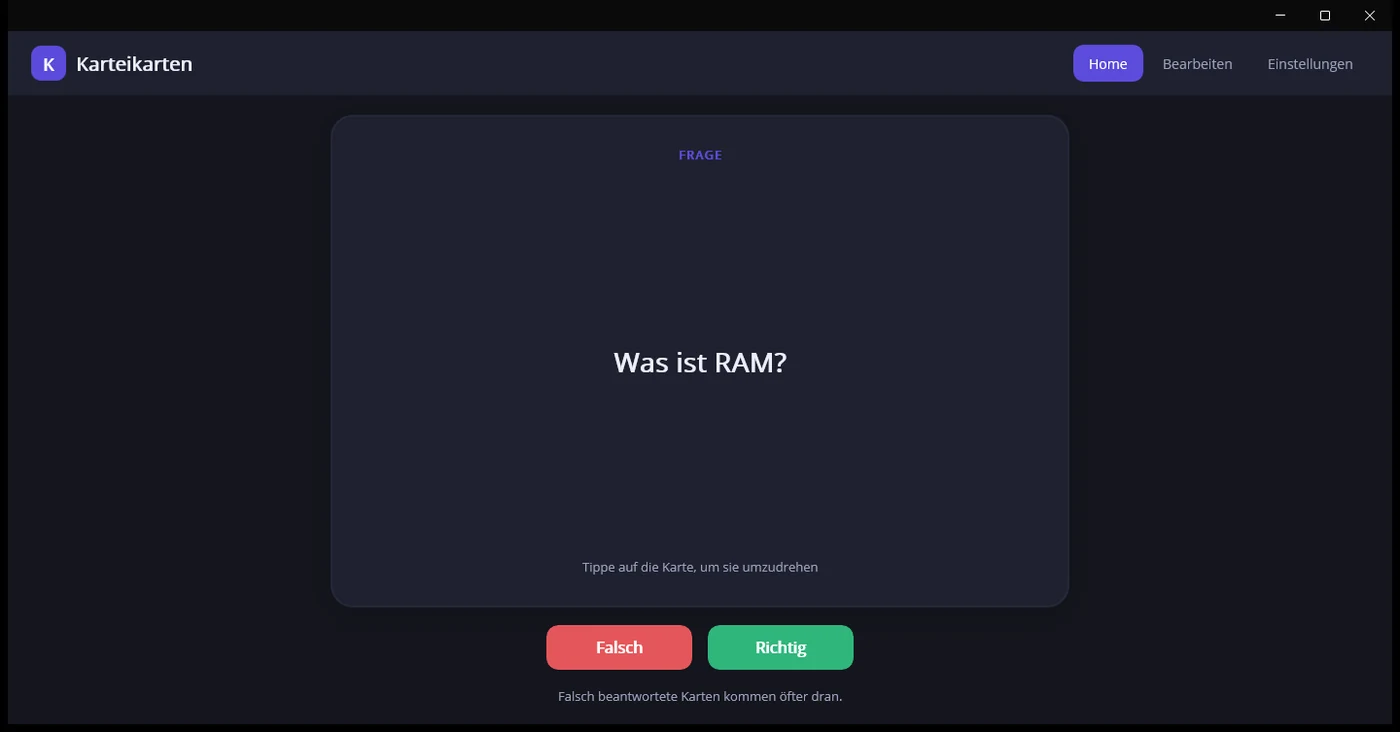
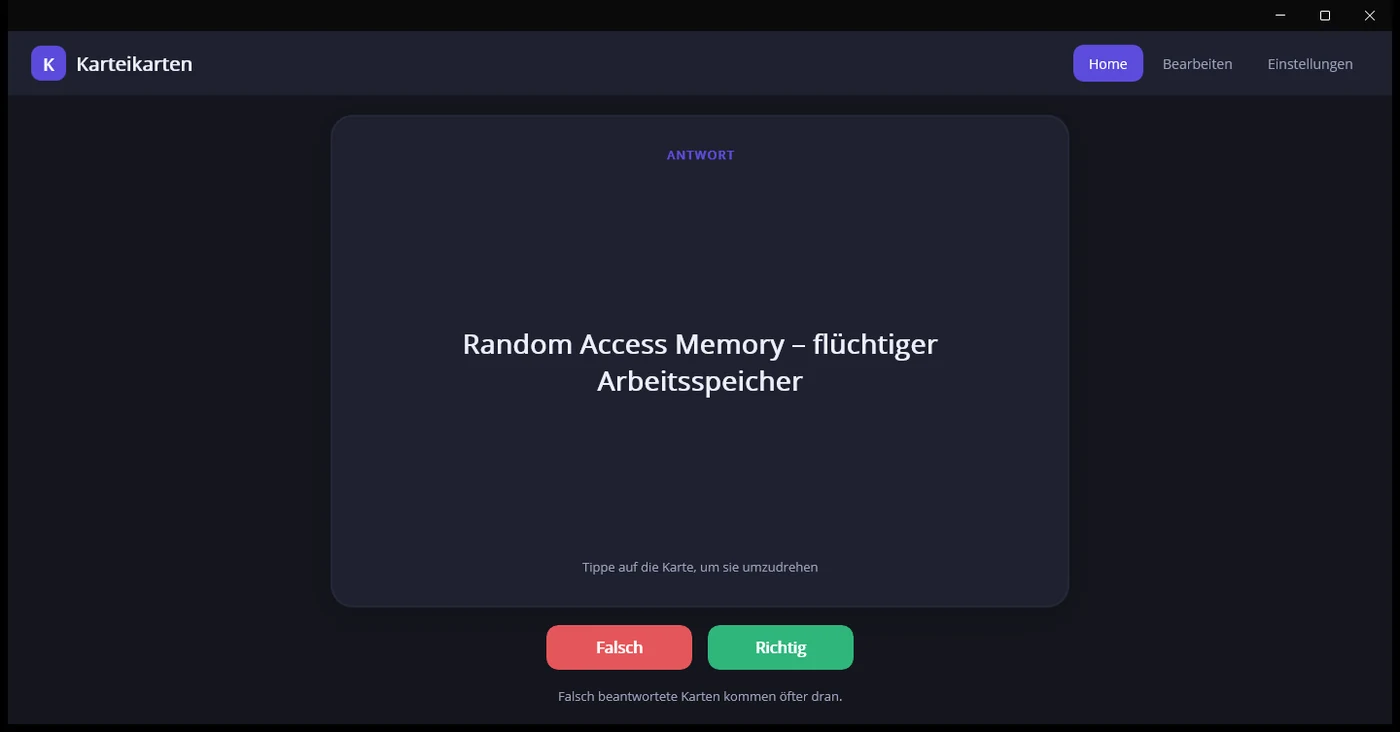
- Cards with a front and a back, sorted into categories. A tap on the card turns it over.
- Every card has points: "Wrong" raises them, "Right" lowers them, and the next card is drawn weighted by those points.
- A start page with categories and the learning view; editing and settings are still in the works. The data is kept in SQLite.
- I reworked the interface later: one color scheme for light and dark Windows, tiles for the categories and a large learning card.
Code
Drawing cards weighted by points
public async Task<Card?> GetRandomCardAsync(int categoryId)
{
    var cards = await _db.Table<Card>()
        .Where(c => c.CategoryId == categoryId)
        .ToListAsync();

    if (cards.Count == 0)
        return null;

    int totalWeight = cards.Sum(c => c.Points);

    if (totalWeight == 0)
        return cards[new Random().Next(cards.Count)];

    int randomValue = new Random().Next(0, totalWeight);
    int cumulative = 0;

    foreach (var card in cards)
    {
        cumulative += card.Points;
        if (randomValue < cumulative)
            return card;
    }

    return cards.Last();
}
The more points a card has, the more likely it comes up next.
What I learned
Using a data model with tables and relations in an app. The learning logic could start out simple.